
Last Update: 2024-11-01
Purpose
This article provides information on how to log in using the Lightweight Directory Access Protocol (LDAP).
Introduction
LDAP is a protocol that enables users to search for information about organizations, people, and so on. LDAP has two main purposes:
-
Store data in an LDAP directory and authenticate users who access the directory.
-
Provide the communication language that applications need to exchange information to directory services, which provide access to information about organizations, individuals, and other data on the Internet.
The most common use case for LDAP is to provide a central location for accessing and managing directory services. LDAP enables you to store, manage, and secure information about your organization, its users, and assets, such as usernames and passwords. This simplifies the access to systems by providing a hierarchical structure of information, and can be critical for corporations as they grow and acquire more user data and assets.
LDAP also functions as an Identity and Access Management (IAM) solution focused on user authentication, including support for Kerberos and Single sign-On (SSO), Simple Authentication Security Layer (SASL), and Secure Sockets Layer (SSL).
Log In Using LDAP
Requirements
-
An Active Directory (AD) authentication server is required within the customers network to integrate with.
-
Integration with the LDAP server has been setup within the HIAB system.
Logging in
-
Go to
https://<hiab-ip-address>/ -
Enter your username and password.
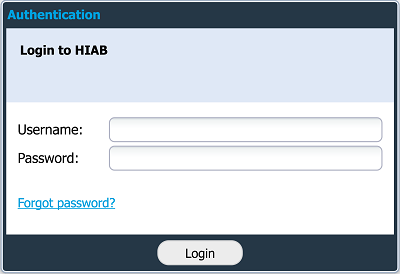
-
Press Login to be authenticated against the LDAP server.
-
After authentication you are logged in to the HIAB system.
Related Articles
- Log In Using LDAP
- HIAB Server Settings
- Common Settings Panel
- Portal Icon List
- Licensing Consumption
- Agent Introduction
- HIAB Console
- Column Configuration
- Getting Started with the Portal
- Logging in to the Portal
- HIAB Enrollment
- HIAB Remote Support
- Log In Using Single Sign-On (SSO)
- Virtual HIAB Appliance
- Testing Target System for Open TCP Ports