
Last Updated: 2025-09-10
Purpose
This article describes how to verify if the deployed Agents are of the latest version.
Introduction
The Agent Latest Version feature lets you verify whether your deployed agents are running the most recent release. It exposes a column in Manage Targets (Netsec Classic) or highlights agents in Portal → Assets → Agents so you can see at a glance which agents match the current version. Knowing this is important to ensure agents receive the latest fixes, updates in scanning logic, and compatibility with the platform, helping avoid gaps or inconsistencies in your scan coverage.
The Agent is updated regularly and new versions are notified through the Release Notes. Update the Agents regularly on you clients to ensure proper functionality. See Updating the Agent article for information on how to update the agents. The latest version can be downloaded from the Account > Download > Agents in the Portal. See Download Agents article for information on how to download the latest agent package.
Retrieving Information About the Latest Agent Version
Agents in Portal
To see the versions of your deployed agents in the Portal UI,
-
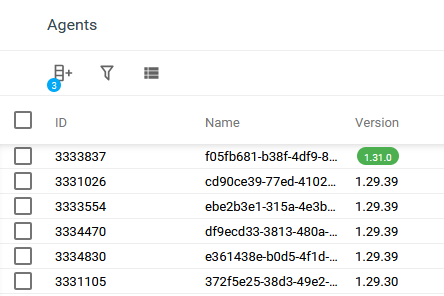
Navigate to Portal > Assets > Agents in the Main Menu, where Agents highlighted in green match the latest version.
Agents in Netsec Classic
To see the latest version of your deployed agents in the Netsec classic UI:
-
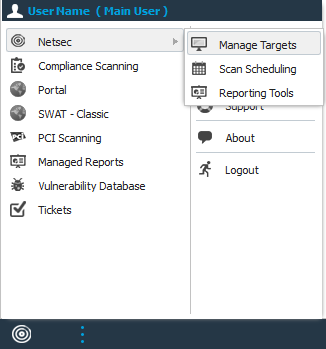
Navigate to Netsec > Manage Targets in the Main Menu.
-
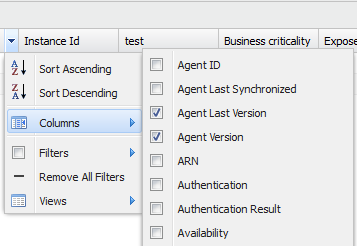
Open Columns menu by clicking on the down arrow in any of the columns headings and select Agent Last Version and Agent Version.
-
The last version is presented by a boolean Yes/No statement.

As the first and second agent does not have a Agent ID then they are not regarded as the last agent version. Only the last agent has a Agent ID and is considered as the Last Agent Version.
-
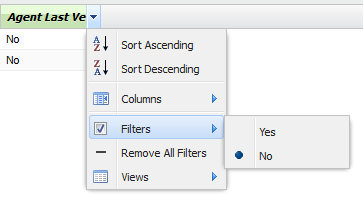
Filtering is done by selecting Filters in the Agent Last Version and setting it to Yes or No.
Checking the Installed Agent Version
To check the the version of the installed agent:
Windows
-
Open Control Panel.
-
Click on Programs.
-
Click Program and Features and search for agent.
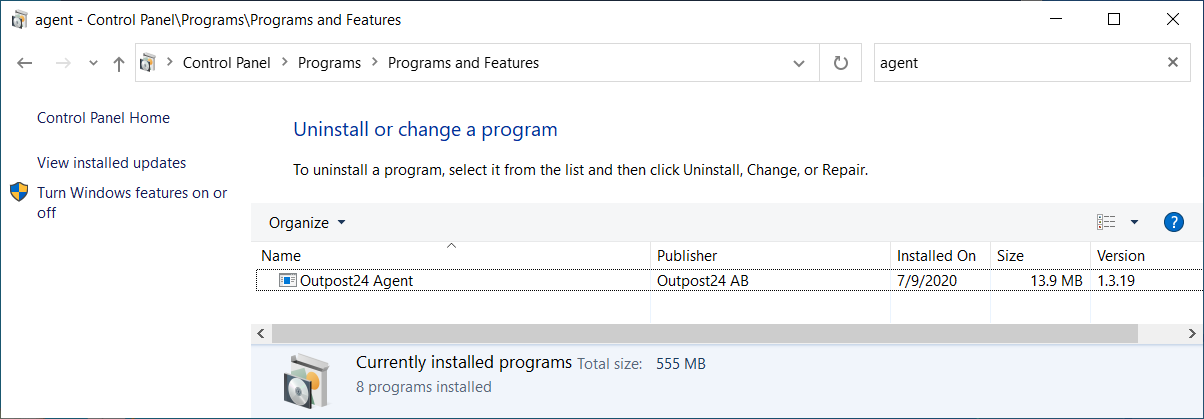
You can also open a PowerShell command as administrator and run the following command:
'C:\Program Files (x86)\Outpost24\Agent\agent.exe' --version

Linux
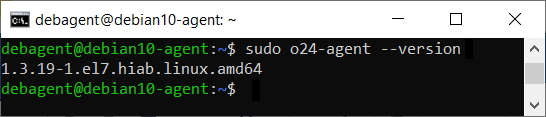
Login to your Linux system with an account having admin privileges or being able to elevate privileges and become root and run the following command:
sudo o24-agent --version
|
Releated Articles
- Reports
- Windows 10/Windows 2019 Server
- Log In Using LDAP
- Report Library
- HIAB Updates
- Vulnerability Database
- General Information about SMB/WinRM Scanning
- Change Risk Levels
- Removing an Agent from Windows
- ServiceNow - Legacy
- Windows 8.1
- Delta
- Scan Blueprint
- Netsec Filters
- Discovering the Agent in OUTSCAN
- Technical Specification
- Account Settings
- How to Test SMB Authentication
- Schedules
- Windows 2016 Server
- Identity Provider Settings
- HIAB Server Settings
- Installing a Linux Agent
- Okta Identity Provider Configuration
- Scanning-Less Scanning
- Workflows
- Troubleshooting checklists
- User Management
- Check Connectivity to Agent Server
- Scan Scheduling Errors
- Overview
- Event Notification Module
- HIAB Maintenance Settings
- HIAB Deployment Guide
- Database Connector (HIAB only)
- Azure AD Identity Provider Configuration
- Add Comments
- Target Groups
- Managing Tags
- Checking if Agent is Running
- Core Installation
- Windows 2008 R2 Server
- Agent Installation Introduction
- Automatic Asset Joining With Netsec
- Manage Users
- Common Settings Panel
- Firewall Setup for Agents
- Scanning Range
- SNMP (HIAB only)
- ADFS Identity Provider Configuration
- Role Management
- Portal Icon List
- Splunk
- Agent Call Home
- Advanced Report Filters
- Accept Risks
- Asset Discovery
- SMB Authentication from OUTSCAN/HIAB
- Virtual HIAB Appliance
- XML API Interface Technical Document
- Using the Agent Info Command
- Scheduled Reports
- Amazon
- User Roles
- Removing an Agent from Linux
- Retrieving the Agent UUID
- Atlassian Jira
- Solutions
- Identity and Access Management (IAM)
- Understanding Scanner and Scheduler
- Finding the Agent Version
- Create and Edit Event Notifications
- Licensing Consumption
- Installing a macOS Agent
- Agent Introduction
- Syslog (HIAB only)
- Setting Up an Agent Using System Proxy
- ServiceNow - App
- Thycotic
- DNS Lookup in UI and in Console
- Supported Browsers
- HIAB Console
- Certificates
- Marking as False Positives
- Managing Agents
- Event Notification - Integration
- Auditing Guide
- Adding Agent Attributes
- HIAB Distribution Settings
- Run Verification Scans
- Agent Latest Version
- Finding New Agents In OUTSCAN
- Setting up a HIAB as an Appsec Scale Scanner
- Column Configuration
- Checking Schedules from OUTSCAN in Agent
- Hardening the HIAB
- Performing a PCI DSS Scan
- PGP on User Accounts
- Event Notification - Use Cases
- Two Factor Authentication
- Logging in to the Portal
- Attributes
- Firewall Rules
- HIAB Enrollment
- Supported Platforms for Authenticated SSH Scanning
- Authenticated Scanning Using WinRM
- Account
- Notification Settings
- OneLogin Identity Provider Configuration
- Windows 7
- HIAB Remote Support
- Compliance Scanning
- Manage Targets
- Assign Tasks
- Authenticated Scanning Using SSH
- Products Database
- Log In Using Single Sign-On (SSO)
- Scan Assessment Configuration
- Tickets Quick Start Guide
- Retrieving Results From the Agent in OUTSCAN
- Appliance Logs
- Converting Normal with Webapp Scans (Netsec) to Portal Workflows
- Updating the Agent
- Troubleshooting SMB Authentication
- Agent Licensing
- View Templates
- Ports
- Mark as False Positives
- Installing a Windows Agent
- Generate Reports
- Using Farsight in Netsec
- Testing Target System for Open TCP Ports
- Basic Credentials
- HIAB Restore
- Scan Stages
- Object Identifiers
- Subscriptions Overview
- Request Clarifications
- Services
- HIAB Setup Guide
- Updating Agent Attributes
- REST API Interface Technical Document
- Getting Started with the Portal
- Scan Configuration Settings
- CyberArk
- LDAP/AD
- Checking if the Agent has Produced Results
- Scans View
- Retrieving a REST API Token From XMLAPI
- ArcSight (HIAB only)
- HIAB E-mail Whitelisting
- Scan Credentials
- Adjust Identity Provider SAML Metadata File
- Scanning Critical Industrial Devices/Machines
- Reporting Tools
- Scan Scheduling
- Scanning Performance and Impact Tuning
- API Examples
- Tags
- PCI Compliance Scanning
- Accepting a Risk
- Importing Tags for AWS Discovery
- Configuring and Accessing the HIAB console using SSH
- Discovery Scan Configuration
- Products
- Vulnerabilities
- Scan Policies
- User Groups
- Resource Group Management
- Create Users
- HIAB Remote SSH Guide
- Download Agents
- Create Targets
- Discussions and Commenting
- Filters
- Notifications
- Windows 2012 R2 Server
- HIAB Backup
- Report Scheduling
- Access Tokens
- O24AUTH
- Complementary Authenticated Scan on Default Credentials
- 2FA on User Accounts
- Authenticated Scanning Using SMB
- Assets
- Dynamic Target Group